

A bent part is only as good as the information behind it. This guide lists what CNC press-brake bending at our Dubai Industrial City workshop can handle, and what to send so the quote is right the first time.
What we bend
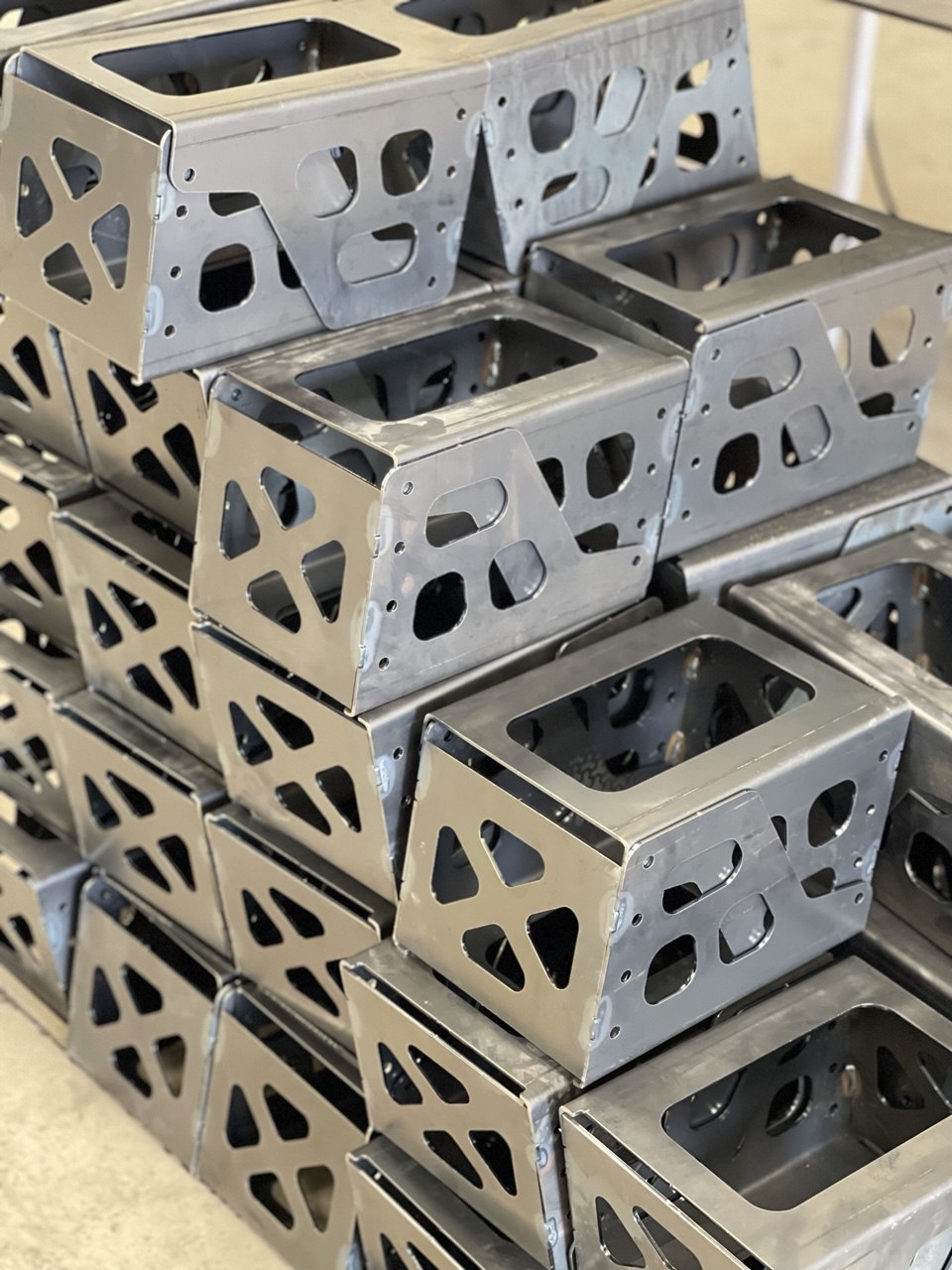
Mild steel, stainless steel, aluminium and other metals, in bend lengths up to 3,000 mm. Parts are cut and bent in the same workshop, so a laser-cut flat pattern goes straight to the press brake, and bent parts go on to welding without leaving the building.
What decides whether a part can be bent
- Bend length. The longest bend must fit within 3,000 mm. Longer parts are made in sections.
- Material and thickness. Material, grade and thickness change the force, the minimum inside radius and the springback. State all three.
- Flange and geometry. Very short flanges, tight returns and deep boxes need tooling checks. Mark them on the drawing so they are reviewed before cutting.
- Hole and slot position. Features placed close to a bend line can distort. Keep them away from the bend, or ask us to review the position.
File checklist for a bending quote
- A flat pattern (DXF or DWG) or a 3D model (STEP or IGES), plus a PDF showing the folded part.
- Material, grade, thickness and finish for every part.
- Quantity, and whether it is a prototype or a repeat order.
- Bend angles, inside radius and flange lengths, if they matter to you.
- Critical dimensions and any tolerance you require. Tolerance depends on the project, so state what is critical and we confirm it for your part.
- Grain direction or surface-finish requirements for visible parts.
- What happens after bending: welding, coating or assembly, and the delivery date and site.
Our management system is certified to ISO 9001:2015, ISO 14001:2015 and ISO 45001:2018.
Send your flat patterns or folded drawings for a bending quote through our contact page. Read more: bending service. Related: laser cutting and MIG welding.