

On a structural or fabricated steel package, the slowest part is often not the cutting — it is the fitter working out which member goes where, where the holes line up, and where each connection is welded. Laser marking removes that guesswork. As a part is cut, the same laser etches part numbers, position lines and weld locations straight onto the steel, so assembly is driven by the marks on the metal, not a drawing spread across a bench.
At Morshedi in Dubai Industrial City, marking is a standard part of our tube laser cutting and beam laser cutting — not a separate, decorative service.
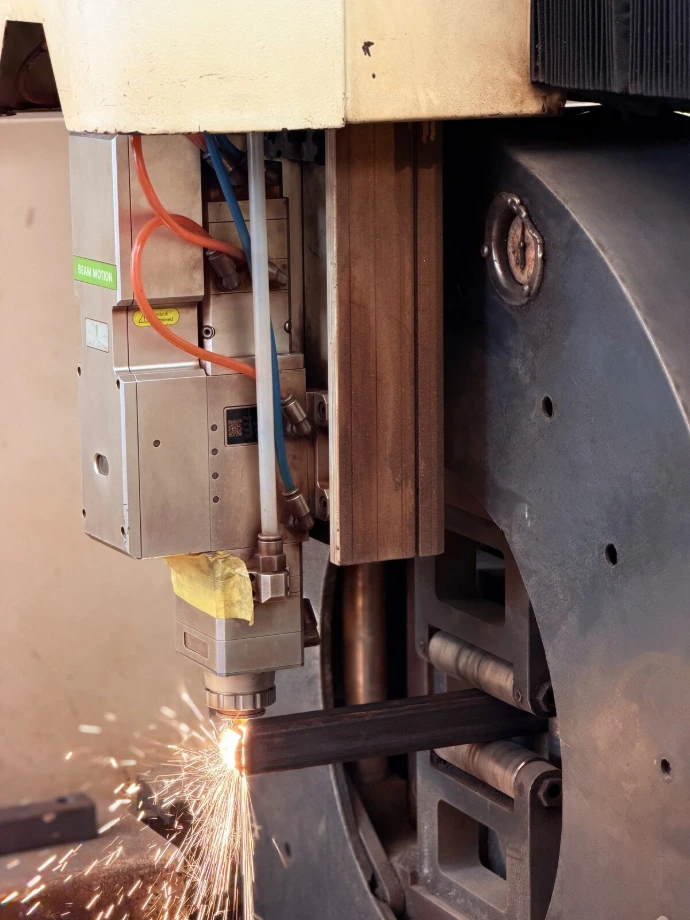
What laser marking is (and is not)
Laser marking uses the cutting laser at a lower power to leave a clean, permanent mark on the surface of a steel part. We use it for the things that make a package assemble quickly:
● Part numbers so every member matches the cutting list and the model.
● Position and reference marks showing where cleats, plates and fittings sit.
● Weld-location marks so the welder places joints exactly where the drawing calls for them.
To be clear about what this is: Morshedi does laser marking of metal parts for fabrication and assembly. We do not offer decorative laser engraving, and we do not mark or cut wood, acrylic, glass or leather. Marking is applied to the metals we already cut — mild steel, stainless steel, aluminium and galvanised steel.
Why marking speeds up assembly
A coped tube or a laser-cut beam that arrives already marked lets a fabricator work from the part itself. There is no measuring out on the shop floor, no scaling off a print, and far less chance of a member being fitted the wrong way round. On a package of hundreds of parts, that is the difference between a slow, error-prone fit-up and a fast, predictable one:
● Fewer errors — the geometry and the marks both come from the same model.
● Faster fit-up — the fitter reads the part, not a drawing.
● Traceability — every part carries its number from the cutting bed to the finished assembly.
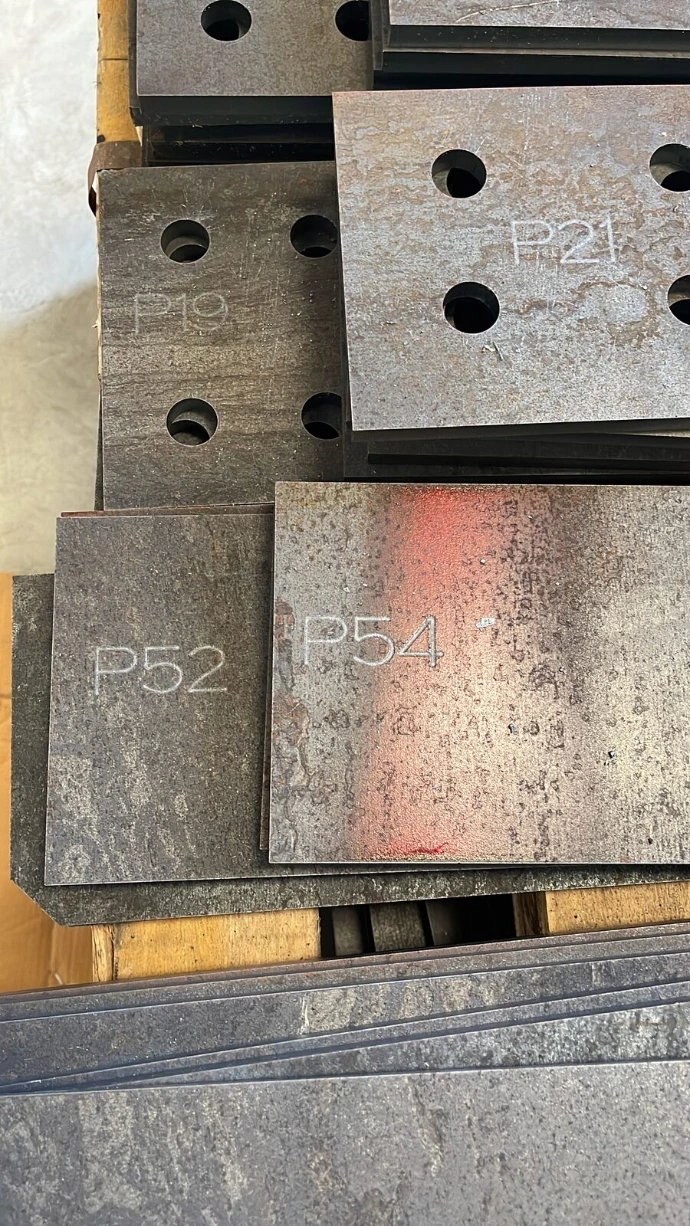
Marking is built into the cut
Because marking happens on the same machine, in the same setup as the cut, there is no extra handling and no second operation. A part is nested, cut, drilled, coped and marked in one pass, then moves on to bending and welding in the same building. It is the same single-source logic that runs across everything we do: fewer handoffs, and parts that fit.
If you are planning a structural or fabricated steel package and want members that assemble quickly on site, marking is worth specifying up front. Send your model or drawings and we will confirm the marking scheme with the cut — request a quote.
Related reading: why fabricators are switching to beam laser cutting and combining CNC bending with tube laser cutting.