

Large beams have traditionally been cut to length on a saw and drilled on a separate line, with copes, slots and web openings added by hand or flame cutting. A beam laser line cuts those details in one setup. Neither route is right for every job, so here is how to choose.
Where saw and drill lines still make sense
If a beam only needs square cuts to length and a simple pattern of round holes, a saw and drill line is a sound, familiar route. It suits repeat orders of standard sections where nothing else has to be cut into the member.
Where laser cutting pays off
- Connection details: copes, notches, slots, slotted holes, cleats and web penetrations are cut from the same file as the holes.
- Repeatability: every beam of a mark is cut to the same program, from the first to the last. Connection holes are positioned to ±0.5 mm.
- Fewer handling steps: less marking out by hand and fewer moves between machines, so fewer places for an error to creep in.
- Weld preparation: bevels up to 45 degrees can be cut where the joint needs them.
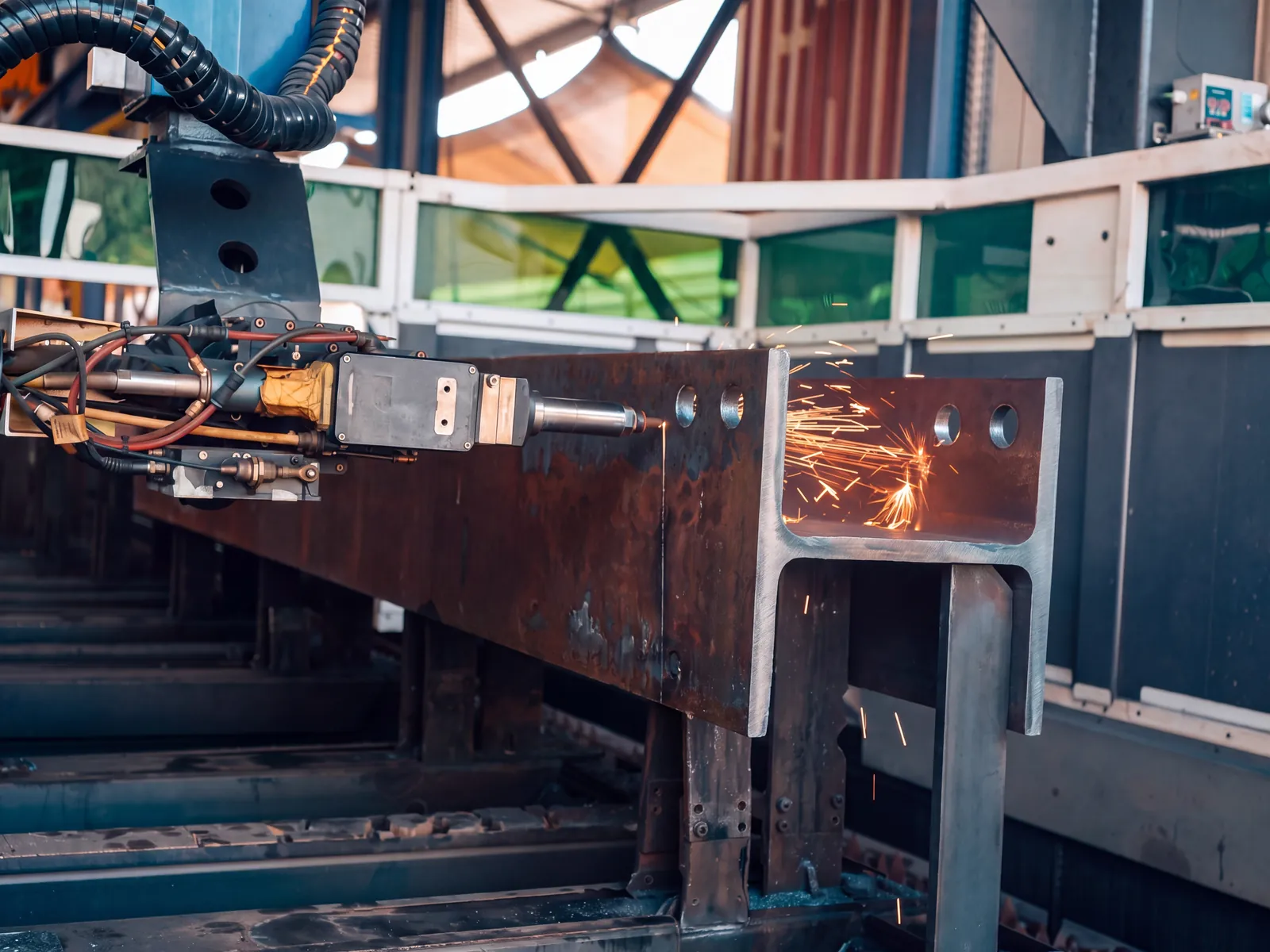
What we cut
H-beams, I-beams, channels and angles in mild steel, structural steel and aluminium. Sections go up to 1,000 mm wide with flange widths up to 400 mm and lengths up to 12 m. We work from DXF, STEP and NC1/DSTV files.
Questions that decide the route
- How many beam marks have copes, notches, slots or web openings?
- Do any ends need a bevel for welding?
- How tight is the hole positioning on the connection?
- Do you need part marks on the beams?
- Is the beam going on to welding, bending or coating in the same workshop?
If most answers are yes, cutting the details on a beam laser usually removes steps downstream. If they are all no, a saw and drill line may be all you need.
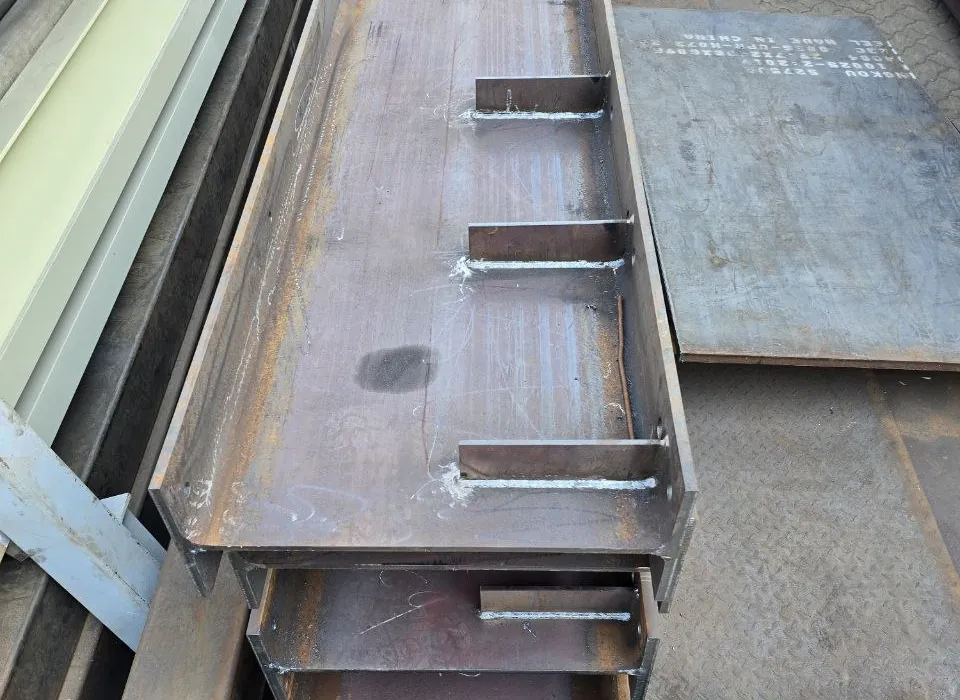
Ready to quote? Read our beam RFQ checklist, then send your beam list or NC1 files or call +971 4 566 7219. See also our steel fabrication in Dubai.