

Not long ago, robots welding parts or AI adjusting tolerances in real time felt like science fiction. Today it is becoming standard practice in forward-thinking workshops. Metal fabrication has entered a new era — faster, smarter and more connected than ever.
In the GCC, where megaprojects rise from desert sands and timelines are tighter than ever, Morshedi is aligning with this transformation, actively exploring emerging technologies and sustainable practices. So what does the future of metal fabrication actually look like?
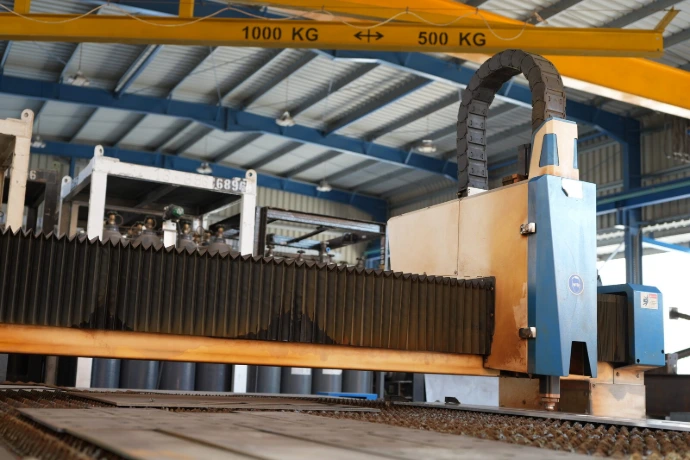
First, a look back: to see how yesterday's bold ideas became today's game changers, read our deep dive on innovation in the metal industry.
Digital transformation
Digital transformation is the foundation of the future. Fabricators are adopting advanced software, sensors and real-time analytics to improve productivity and precision. IoT-enabled machines monitor equipment, track material use and send predictive-maintenance alerts before breakdowns — a smarter workflow from start to finish. Morshedi is exploring enhanced process control and cloud-based platforms for more efficient project management as it moves toward a more connected environment.
Automation and AI
If digital transformation lays the foundation, automation and AI drive it forward. Robotic and AI-guided systems handle complex tasks with precision, ensure consistency across high volumes, and free skilled technicians for strategic, creative problem-solving. Morshedi is evaluating robotic cells and AI-driven nesting for their potential to improve output and reduce waste in future operations.
Smart materials and additive manufacturing
Smart materials — shape-memory alloys and self-healing metals that respond to temperature or pressure — are already used in aerospace and advanced manufacturing. Additive manufacturing (metal 3D printing) adds a layer-by-layer approach that reduces waste, speeds prototyping and enables complex geometries. Morshedi monitors these closely; while additive is not yet standard across large-scale jobs, its influence on custom prototyping is clear.
Feature | Traditional fabrication | Additive (metal 3D printing) |
Material usage | Higher, with more waste | Minimal, layer by layer |
Design flexibility | Limited by cut/bend constraints | Very high, complex geometries |
Time to prototype | Slower | Fast |
Best for | Volume and structural work | Small batches and prototypes |
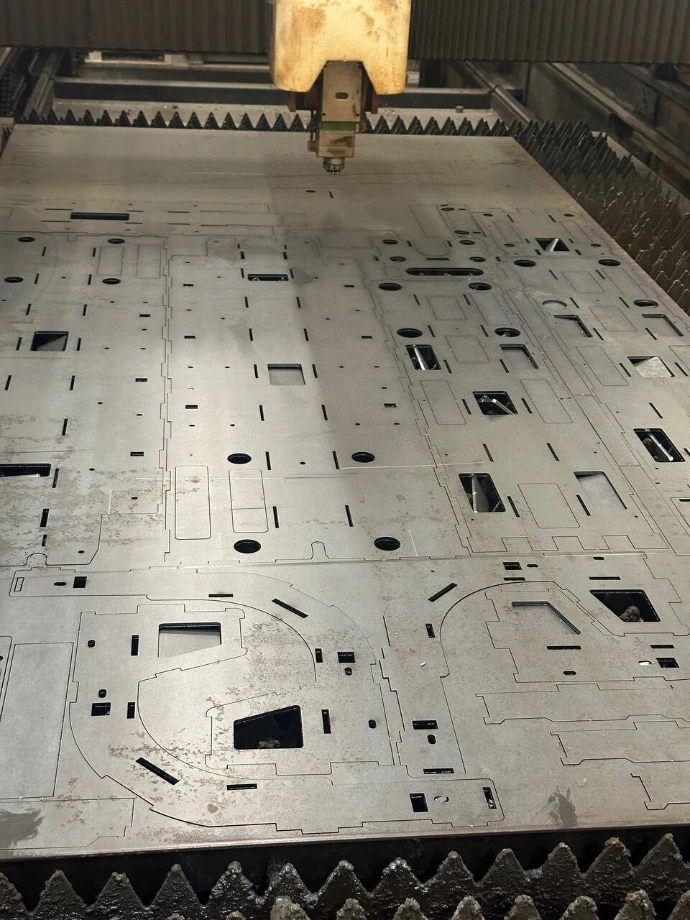
Data-driven fabrication and sustainability
Real-time analytics let manufacturers monitor operations, catch inefficiencies and optimize on the fly — every machine connected to a dashboard that flags deviations instantly, reducing downtime and improving quality. Sustainability is becoming a defining feature too: low-emission processes, energy-efficient CNC systems, scrap-metal reuse and energy audits. Morshedi is assessing eco-friendly measures such as closed-loop cooling and scrap reuse as it moves toward greener operations.
Human-machine collaboration
Machines are not replacing people — they work alongside them. Collaborative robots and smart CNC systems let skilled operators oversee complex processes, interpret data and fine-tune machines in real time. Operators become process analysts and system calibrators, and upskilling becomes essential. The future is shaped by the synergy of technology and human intelligence.
Partner with Morshedi
The future of metal fabrication will be defined by those who combine innovation with responsibility. Morshedi is positioning to lead through quality, efficiency and environmental responsibility. Whether you need precision CNC bending, laser cutting or custom fabrication, contact us to discuss your project — and see the practical side in the hidden costs of metal fabrication.