

Dubai's architecture demands precision, speed and aesthetic perfection. For the frames and pergolas that form the skeleton of these projects, the old methods of sawing, drilling and manual notched welding are being rapidly replaced by advanced tube laser technology.
Choosing between tube laser cutting and traditional fabrication is now a matter of project viability, cost-efficiency and structural integrity. For contractors and developers, understanding why tube laser has become the standard is essential to staying competitive.
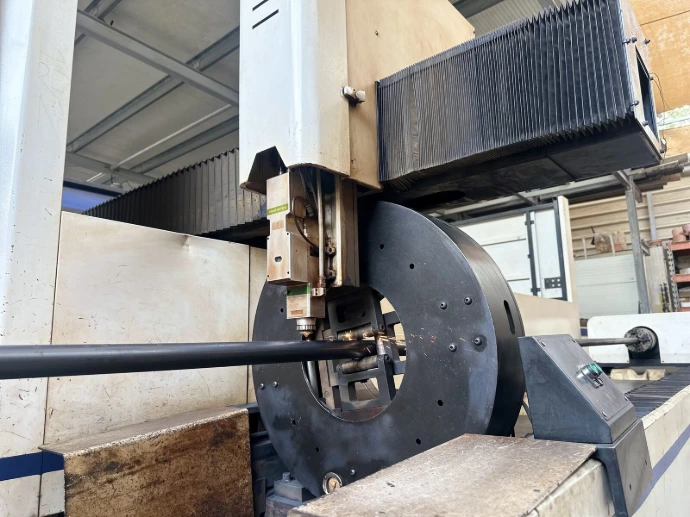
The evolution of metal fabrication in the UAE
For decades, fabrication was linear and manual: tubes were measured by hand, cut on band or cold saws, then moved to a second station where holes were drilled and notches ground out for joints. Every handoff added time and a chance for error.
Precision and accuracy advantage
Traditional fabrication suffers from tolerance stack-up: if a saw cut is off by a millimetre and a hole is slightly misaligned, the whole frame becomes hard to assemble, leading to forced fits, weakened joints and gaps filled with excess weld. A tube laser is guided by a digital CAD/CAM file, so every cut is identical to the design — every rafter, beam and post fits like a puzzle piece, and structural integrity improves.
Structural integrity beyond simple cuts
The biggest difference is in the joints. Saws are limited to straight or mitred cuts; a tube laser enables more:
● Tab-and-slot design — pieces click into place before welding, so the frame is self-jigging and cannot be assembled incorrectly.
● Weld preparation — the laser can bevel edges during cutting, creating a clean V-groove for weld penetration and a stronger joint with less grinding.
Aesthetic excellence for luxury outdoor living
Pergolas are luxury additions to villas, hotels and public spaces. Traditional fabrication leaves rough edges, burrs and heat-affected zones needing cleanup. Tube laser cutting produces a virtually burr-free finish; the localized heat prevents warping and keeps the sleek, straight lines modern designs require — from geometric motifs to floral patterns.
Speed and efficiency to meet Dubai's deadlines
Traditional fabrication is a multi-step process — marking, saw cutting, drilling, notching, deburring, then manual jigging. Tube laser cutting condenses these into one: a single machine cuts to length, notches the ends and drills the holes in a fraction of the time. Work that would take a team several days can be done in hours, helping contractors hit tight handover deadlines and cut labour cost.
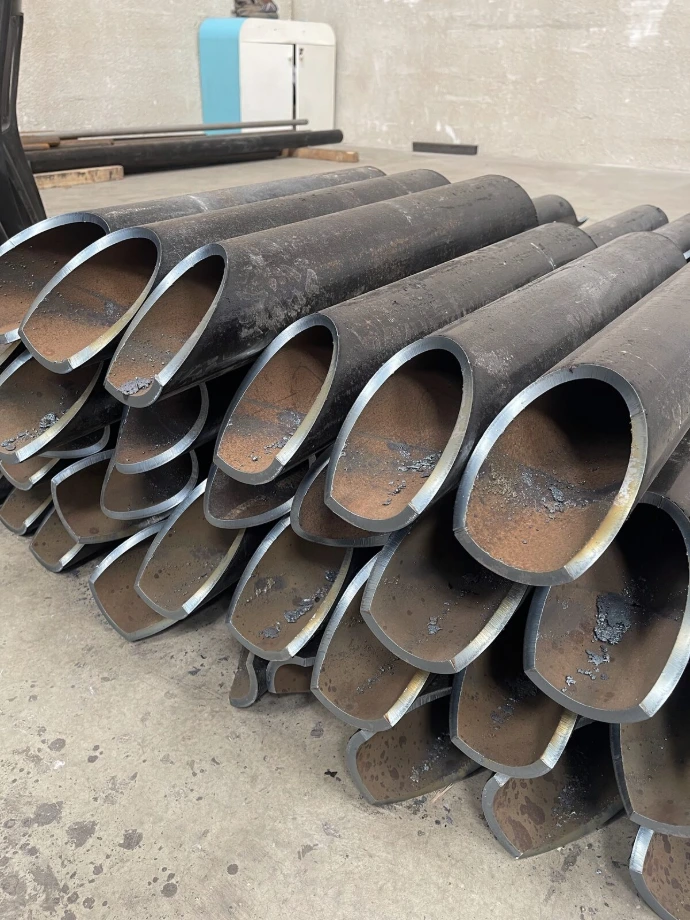
Versatility in materials and profiles
Dubai's architecture uses a wide material range, from carbon steel for heavy frames to aluminium and stainless steel for beachfront pergolas. Traditional saws struggle with hardened materials and can work-harden the cut edge. Tube lasers, particularly fiber lasers, handle aluminium, stainless steel and high-strength steels, across profiles including:
● Round tubes
● Square and rectangular hollow sections
● Open profiles such as C-channels and angles
This versatility gives architects design freedom — and it applies right across our wider laser cutting service.
Seamless integration with digital workflows
In the era of Building Information Modeling (BIM), tube laser cutting is a digital-first process: the same 3D model the architect uses is imported straight into the laser's software, eliminating the interpretation errors that occur when a fabricator reads complex angles off a flat drawing. Every component arrives on site exactly as intended.
Why choose tube laser over traditional fabrication
● Accuracy — the laser holds tight, repeatable tolerances; traditional saws vary by millimetres.
● Complexity — interlocking joints and patterns, versus straight/mitre cuts only.
● Speed — multiple processes combined into one, versus many stations and manual labour.
● Consistency — every part identical, versus human fatigue and error.
Contact Morshedi for your tube laser cutting
At Morshedi Building Metal Products Manufacturing, we combine advanced technology with deep industry knowledge to deliver precision-engineered components that simplify assembly. Whether it is a signature pergola or a heavy-duty industrial frame, our team handles the most demanding specifications — see also common applications in construction and fit-out, or request a quote.
FAQs
How does tube laser cutting improve pergola assembly?
It creates self-jigging parts with tab-and-slot designs, so components fit without manual measurement or complex jigs.
Can tube lasers cut different shapes?
Yes — round, square and rectangular profiles, plus open channels and specialized architectural shapes.
Is tube laser cutting more expensive than saw cutting?
Machine rates differ, but it reduces total cost by minimizing waste, eliminating secondary processes and cutting manual labour.
Why is precision important for frames in Dubai?
Extreme temperatures cause metal expansion; precise cutting keeps joints secure and flawless in the local climate.
What materials can be processed?
Carbon (mild) steel, stainless steel and aluminium — suited to Dubai's architectural needs.