

When preparing structural steel for welding, the right method saves time, improves weld quality and reduces cost — especially on complex or large-scale projects. Two common approaches are bevel cutting and edge grinding. Here is how they compare on speed, precision and practicality, and why fabricators are shifting toward automated bevel processes.
Whether you are detailing a high-rise or heavy industrial frameworks, understanding the difference between automated bevel cutting and traditional edge grinding can transform workflow efficiency — a core part of steel fabrication in Dubai.
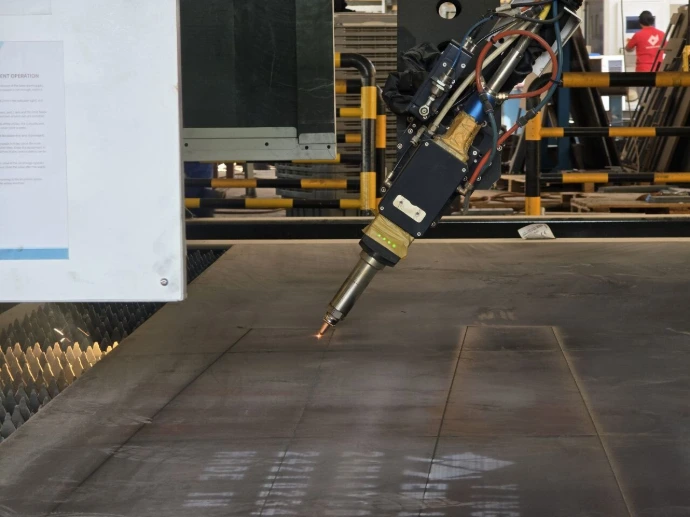
What is bevel cutting, and why it matters
Beveling creates an angled edge so that when two edges meet they form a V-shaped groove ready for welding — giving better penetration, stronger joints and cleaner results. Historically weld prep was done with grinders and hand torches; today bevel laser cutting produces consistent bevel angles with minimal heat distortion and maximum speed. Poor bevels lead to weak joints, rework and delays, so efficient bevel prep is critical across infrastructure, commercial building, oil and gas, and industrial fabrication.
Edge grinding: the traditional approach
Edge grinding uses handheld grinders or stationary wheels to shape a plate edge. It is familiar and cheap:
● Low equipment cost — most welders already have grinders.
● Field adaptability — can be done on site without moving plates.
● Flexible for odd shapes — useful on non-standard pieces or tight spots.
But it has real drawbacks: inconsistent results from human error, slow going on larger runs, worker fatigue, and surface quality that often needs extra finishing before welding. For small jobs it is a valid fallback; when speed, repeatability and precision count across hundreds of plates, automated beveling wins.
Bevel laser cutting: the modern advantage
This method brings laser precision and automation together — tight tolerance control, smooth edges, and complex geometries without re-fixturing. See the full laser bevel cutting advantages:
● Precision & repeatability — each edge meets exact specifications, so welds fit with minimal adjustment.
● Speed — bevels are cut quickly and consistently across many parts.
● Clean finish — smooth edges often eliminate secondary finishing.
● Reduced heat zone — heat is concentrated only where needed, minimizing distortion.
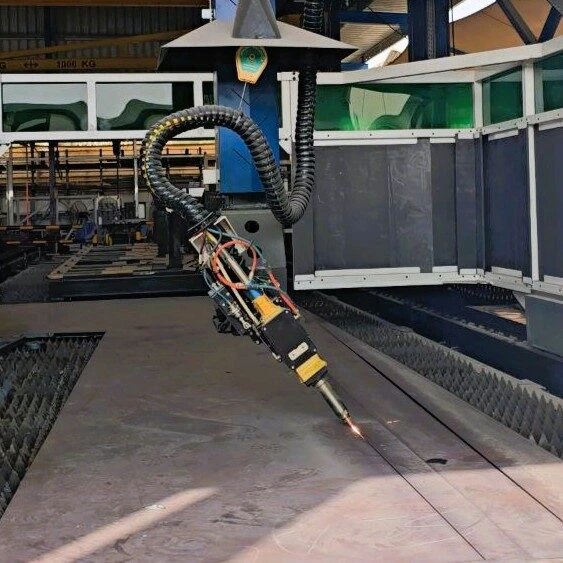
A note on beveling methods
Across the industry, fabricators choose from several beveling methods depending on material and project — plasma, laser, waterjet and lathe beveling each have their place. At Morshedi, bevels are produced by laser: high-precision, weld-ready edges on sheet and structural steel components, up to a 45° bevel.
When to grind vs. when to bevel cut
Method | Best use case | Trade-off |
Edge grinding | Small jobs, quick on-site fixes | Cheap and versatile, but slow and inconsistent |
Laser bevel cutting | Large runs, high precision | Fast, clean and precise, with higher equipment cost |
For most Dubai industrial and construction projects, laser beveling delivers far better results than manual grinding — better alignment, less reshaping and faster cycles, which matters most where strength and safety are critical.
Why Morshedi for bevel cutting
Founded in 2022 and led by a team with over 20 years of industry experience, Morshedi provides comprehensive steel solutions — CNC laser cutting, bevel preparation, bending, welding and full structural assemblies in Dubai. Our laser systems deliver clean, weld-ready edges for architectural steel and heavy industrial frameworks alike. See also bevel laser cutting for complex designs, or request a quote.
FAQs
What is the difference between bevel cutting and edge grinding?
Bevel cutting uses automated tools or lasers for precise edges; edge grinding is manual and slower.
Why choose laser bevel cutting?
High precision, smooth edges, minimal heat distortion and faster prep for large-scale steel.
Is edge grinding still useful?
Yes, for small jobs or on-site fixes, but slower and less consistent than automated beveling.
Which steel suits laser beveling?
A range of steel grades and thicknesses, including heavy structural sections.
How do I access bevel cutting?
Share your drawings and Morshedi will produce weld-ready laser bevels for your project.