

In a world where speed, precision and customization define industrial success, tube laser cutting has become the go-to solution for manufacturers, fabricators and designers. Whether it is construction frameworks, automotive components or architectural metalwork, this technology provides accuracy and efficiency. Here is how the process works, its advantages, and what factors influence the pricing.
For the full service detail, see our tube laser cutting service.
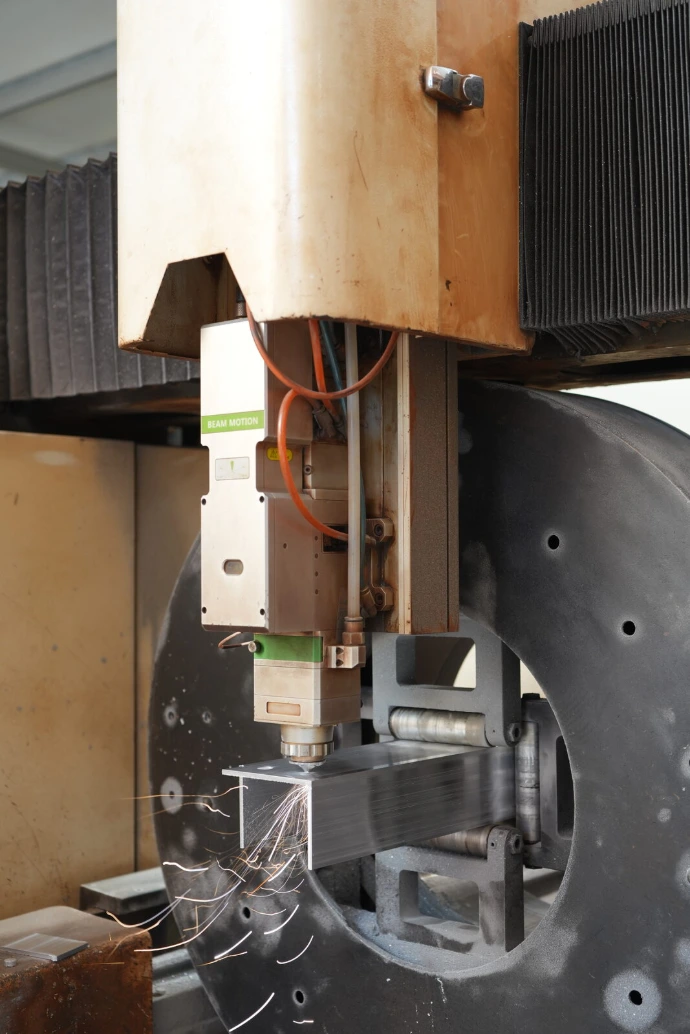
Understanding the tube laser cutting process
At its core, tube laser cutting uses a focused, high-powered laser beam to cut through round, square and rectangular profiles. The process is computer-guided, so every cut, slot and hole meets the design specification. The journey begins with a digital design created in CAD software; this 2D or 3D model is uploaded to the machine's CNC system, which guides the laser through each programmed move.
During cutting, a fiber laser beam melts or vaporizes the metal while an assist gas such as oxygen or nitrogen clears away the molten material, leaving a clean, burr-free edge. The whole process is swift, consistent and capable of intricate shapes that would be nearly impossible with traditional tools.
Stages of the tube laser cutting process
Design input. A detailed digital design outlines every contour and dimension of the final piece.
Material preparation. Tubes are loaded into an automated system and the machine calibrates its laser to the material.
Laser cutting. The fiber laser moves with pinpoint accuracy, cutting with minimal heat distortion.
Assist gas application. Nitrogen or oxygen enhances cutting precision and prevents oxidation.
Post-processing. Finished tubes often require little to no secondary treatment, reducing production time and cost.
Benefits of Tube Laser Cutting
The benefits extend far beyond speed and accuracy:
● Consistent precision — CNC technology ensures consistency across every piece, with clean, repeatable results from the first part to the last.
● Time efficiency — automation reduces manual handling and meets urgent deadlines.
● Design flexibility — intricate holes, curves and angles give endless design possibilities.
● Material optimization — advanced nesting software minimizes waste on the tube.
● Smooth edges — cuts are clean and burr-free, often needing no additional finishing.
● Non-contact cutting — no physical contact means less tool wear and no risk of deforming delicate material.
Understanding the Cost Factors
Material type and thickness. The type and density of material drive the cost. Higher-grade stainless and thicker aluminium can need more laser power and slower cutting speeds, which adds to machine time.
Job complexity. The more intricate the design, the more time the machine needs. Simple straight cuts are economical, while complex geometries, tight tolerances, multiple holes, bevel cuts or part-marking can significantly increase programming time and laser operation.
Quantity and batch size. Large runs are more cost-efficient — setup and programming are spread across more pieces, lowering the average price per metre.
Machine operation time. Pricing is usually based on machine time; efficient designs and optimized nesting reduce cutting duration.
Additional services. CAD design assistance, premium assist gases, coatings or post-processing such as polishing and deburring add quality — and cost.
Applications across industries
Tube laser cutting is highly versatile — used for structural frameworks and railings in construction, façade panels and decorative metalwork in architecture, chassis components and brackets in automotive, and machinery parts across industrial manufacturing. Its adaptability to materials such as mild steel, stainless steel, aluminium and galvanised steel makes it an essential technology across these sectors.
Many businesses now prefer laser-based cutting for its consistency and repeatability — see why tube laser wins over traditional fabrication, and how our wider laser cutting service fits your project.
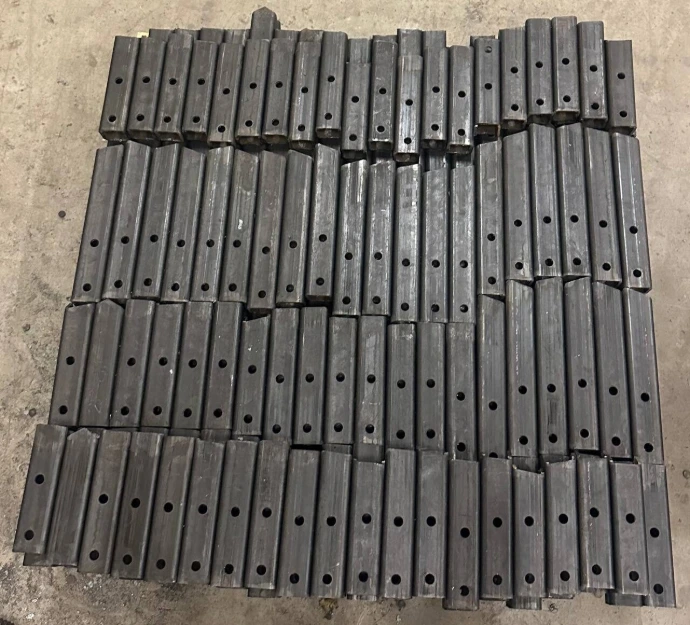
Partner with Morshedi for precision and performance
At Morshedi, we combine innovation with expertise to deliver tube laser cutting in Dubai. Our CNC-controlled machines handle round tube up to Ø650 mm, and square and rectangular sections within a 650 mm diagonal, in lengths up to 12 m. With advanced rotational clamping, we guarantee seamless cuts and precise finishes for every project.
Reach out today to get a personalized quote — request a quote.
FAQs
What materials can be processed?
Our tube laser can handle mild steel, stainless steel, aluminium and galvanised steel. We do not cut brass or copper.
How does the process ensure accuracy?
It uses CNC automation and high-powered fiber lasers; digital CAD designs guide the laser path for consistent results with minimal waste.
Which industries benefit most?
Construction, architecture, furniture and automotive — for both functional components and decorative structures.
How is pricing determined?
By material type, thickness, design complexity and batch quantity. Additional services such as polishing, part-marking or specialized coatings may influence the final cost.
Why choose professional tube laser cutting?
CNC-guided automation and expert handling give precision, faster turnaround and consistent quality across large-scale or custom work.